The NHS is a lifeline for everybody, with many of us being born and regularly treated in hospitals and doctors’ surgeries for free. However, as our health service comes under pressure and waiting lists remain long, private healthcare use is rising.
A 2025 survey from the Independent Healthcare Providers Network (IHPN) found that approximately one third of people in the UK had used private healthcare at some point in their lives. More importantly, 71% of respondents said they would consider doing so – an increase from 64% two years previously.
There are benefits to accessing private healthcare, especially in retirement, as you may be more likely to face health issues. Taking out private medical insurance (PMI) will give you access to the services you need, but there are costs to consider.
Deciding whether to pay for PMI can be a key part of retirement planning, especially if you currently have employer cover and will need to replace it with your own policy when you stop working.
Here are some pros and cons to consider.
1. PMI could give you faster access to the right treatments
If you fall ill, you want to access treatment as quickly as possible so you can get better and continue enjoying your retirement.
Delaying treatment could also mean your condition worsens, threatening your health and making it more challenging to treat when you eventually do see a doctor.
Research from the IHPN shows that, in March 2025, the average wait time between referral and treatment for NHS patients was 17.6 weeks, while private patients waited 10.6 weeks.
As such, having PMI could help you get faster access to treatment and protect your health during retirement.
2. Monthly premiums may be easier to manage than a significant one-off cost
You can still access private healthcare without insurance, but it could be incredibly costly.
For example, PHIN reports that, at a London hospital in 2026, you could pay:
- £3,074 per eye for a cataract operation
- £15,712 for a hip replacement
- £15,689 for a knee replacement.
As you can see, if you don’t have PMI and want to access private treatment, you may need to find a large sum at short notice. Drawing this amount from your savings or pensions could deplete your retirement pot faster than expected, potentially disrupting your income strategy.
Depending on your situation, you might need to compromise on your retirement lifestyle to pay for private treatment.
However, if you have PMI, you will pay a regular monthly premium. Your policy will then cover the cost of certain private medical treatments.
These regular payments may be easier to fit into your budget than a large, unexpected lump sum.
However, it’s important to check precisely what is covered by your policy because certain treatments may not be included. You may also have to pay an excess when claiming on your PMI. This could mean that, despite paying for PMI, you still have to cover some medical costs.
3. You will need to find room in your budget for regular PMI payments
PMI can spread the cost of medical treatments and prevent you from having to draw an unplanned lump sum from your savings. However, you do need to consider how you’ll fit the premiums into your budget.
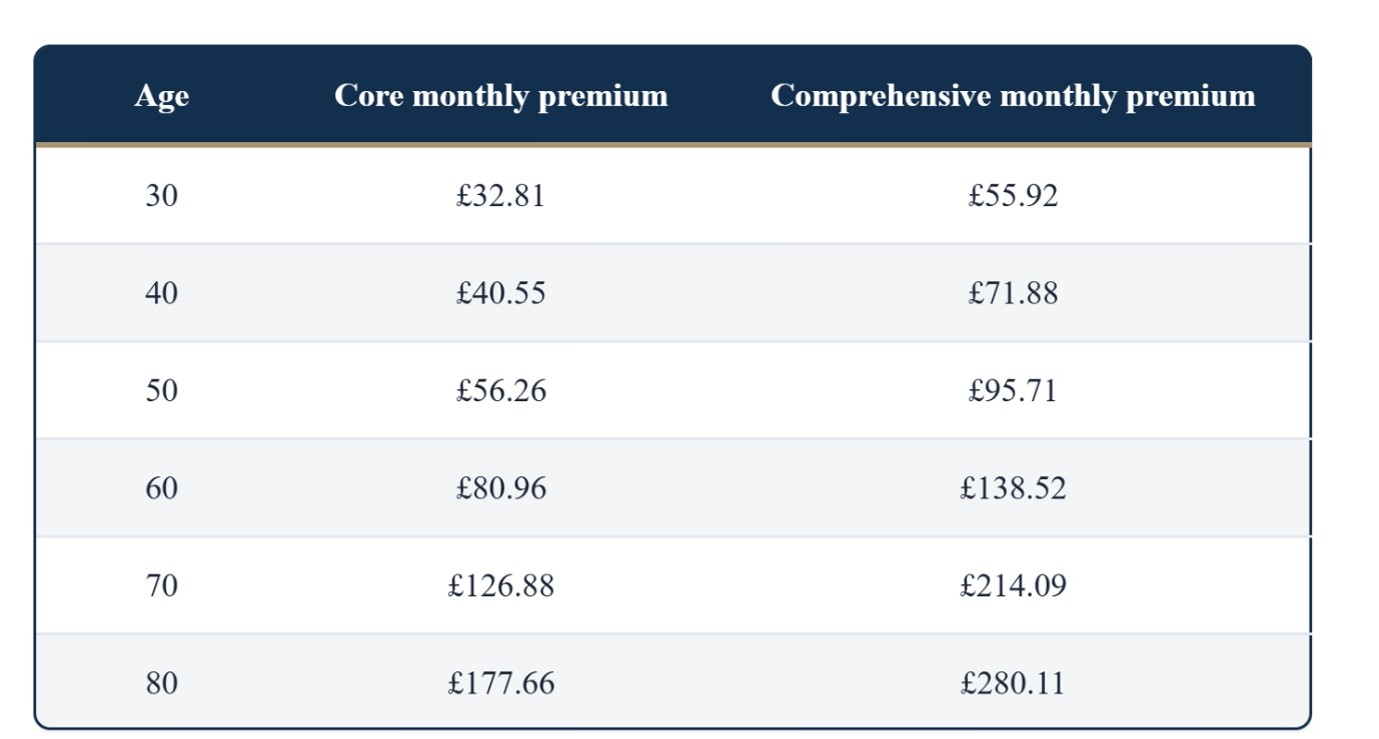
The premiums vary depending on your age, medical history, lifestyle, and level of cover. The following table shows what you could pay in 2026.
Source: Which?
As you can see, PMI could add a significant amount to your monthly outgoings. It’s important that you consider this when planning how you will generate an income in retirement. In some cases, you may need to build additional savings so you can absorb this cost without sacrificing your budget elsewhere.
We can use cashflow planning to model how paying for PMI might affect your retirement income plans and how you could prepare for this.
4. There is a chance that you’ll never benefit from the policy
As with any insurance, you could pay for PMI without ever needing to use it.
While this could be considered a downside, it’s important to recognise the true value of PMI – it offers peace of mind.
Your monthly premiums will ensure that, should you fall ill, you will be able to access the necessary treatment quickly, so you can reduce the chances of further health issues and get back to enjoying your retirement.
Get in touch
Deciding whether to pay for PMI in retirement can be challenging, but we can help you make an informed decision.
Please give us a call on 01276 855717 or email info@braywealth.com today to learn more. For advice on Private Medical Insurance, we will refer you to a specialist adviser.
Please note
This article is for general information only and does not constitute advice. The information is aimed at individuals only.
All information is correct at the time of writing and is subject to change in the future.
The Financial Conduct Authority does not regulate cashflow planning.
Note that private medical insurance plans typically have no cash in value at any time and cover will cease at the end of the term. If premiums stop, then cover will lapse.
Approved by the Openwork Partnership on 02/10/2026
 Production